The Asylumist
This post is by Mikhail Sebastian Okunuga, a coffee connoisseur, world traveler, writer, and memoirist whose work explores statelessness, exile, and the quiet resilience of survival. Drawing from years of displacement and travels across Africa, Asia, Europe, and the Pacific—including prolonged immigration detention—his award-winning memoir Stateless in Paradise has received both the International Impact Book Award and The Prestigious International Hope Book Award, honoring its powerful testimony to endurance, dignity, and the human search for belonging.
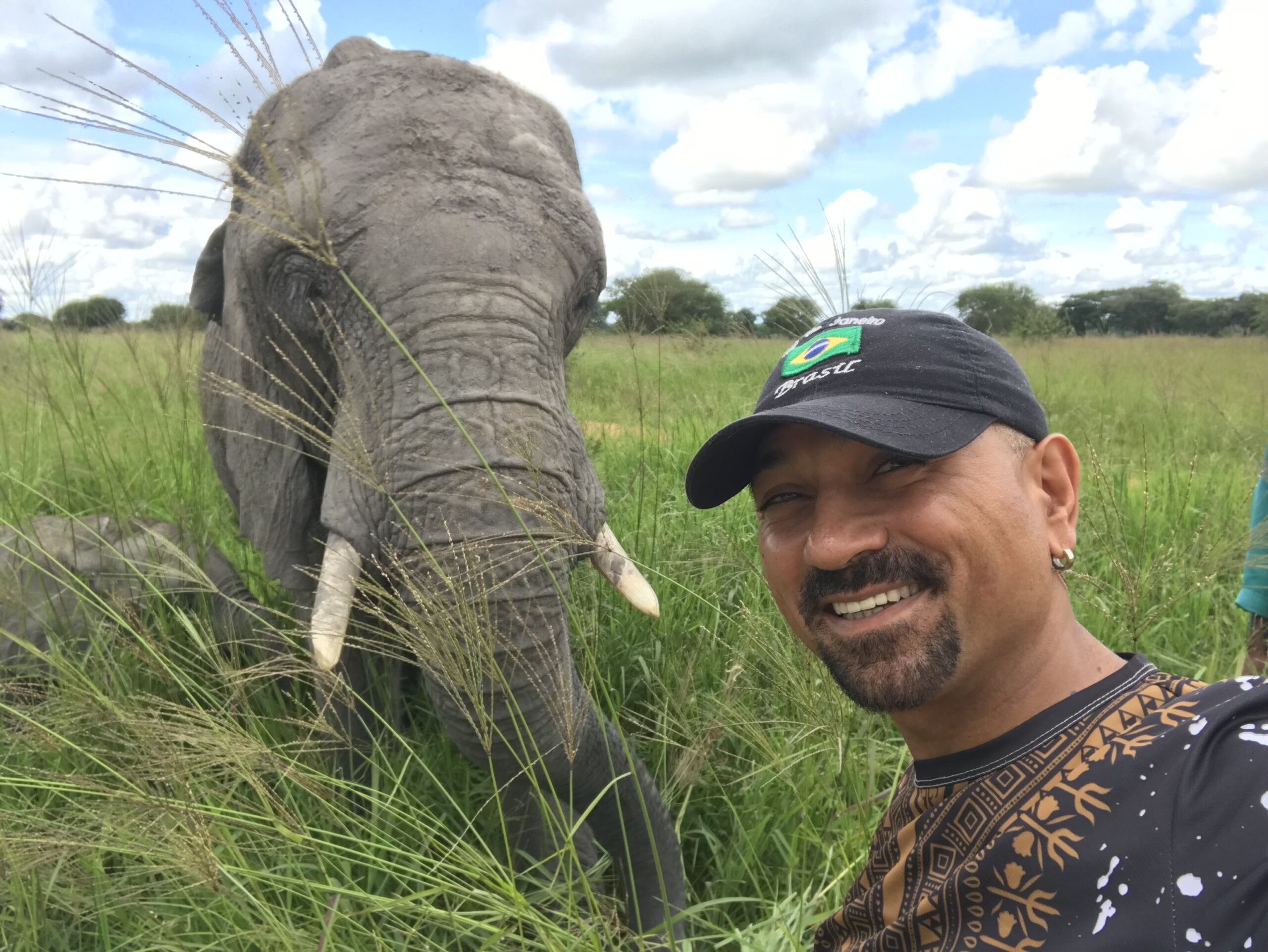
I was born in Baku, Azerbaijan, to Armenian parents during the years of the Soviet Union. Like many families in the region, mine was caught in the collapse of an empire and the rise of ethnic conflict. When the Soviet Union dissolved, borders hardened, new states formed, and nationality laws changed overnight. For people like me, identity became a liability rather than a guarantee. I grew up moving through a world where papers determined your worth, your safety, and your future.
As conflicts escalated and opportunities disappeared, I began a life of movement. I traveled, worked, and survived across multiple countries, often without the security of recognized citizenship. Eventually, lacking a valid national passport, I obtained a World Passport issued by the World Service Authority. This was not a perfect solution, but it offered hope—a way to cross borders, to exist, to keep moving when no country would formally claim me.
That fragile hope collapsed when I arrived in American Samoa, a territory of the United States. Instead of continuing my journey, I became trapped. My travel document was not recognized, and I was neither admitted nor deported. For 18 months, I was stranded in a place that looked like paradise but felt like prison. I could not leave. I could not work legally. I lived under constant surveillance and uncertainty, unsure whether I would be detained indefinitely or forced into another cycle of deportation.
This experience revealed the cruel paradox of statelessness. You are not illegal enough to deport, yet not legal enough to stay. You exist in a bureaucratic void, where every door is closed because no system is designed to handle people who belong nowhere. I was not alone in this condition. Across the world, stateless people are detained, abandoned or ignored because governments do not know what to do with them—or choose not to know.
During those months in American Samoa, I learned how fragile dignity becomes when identity is stripped away. Without papers, you must constantly explain your existence. You are questioned, doubted, and dismissed. You lose access to basic rights: employment, healthcare, education, freedom of movement. You are alive, yet legally invisible. The psychological toll is immense. Statelessness does not only steal your future; it erodes your sense of self.
Eventually, after months of uncertainty and with the involvement of humanitarian advocates, I was allowed to leave. But my struggle did not end there. Statelessness follows you. Each border crossing is a gamble. Each interaction with immigration authorities carries the risk of detention or rejection. Even when you find refuge, you live knowing that your status can be questioned at any moment.
The path to legal stability in the United States was long and uncertain. It required patience, legal advocacy, resilience, and the support of people who believed in my humanity beyond my paperwork. I navigated asylum processes, temporary statuses, and endless documentation. Every step forward came with fear of being sent back into limbo.
Yet, slowly, something changed. I began to rebuild my life. I worked, contributed, and formed deep connections. I became part of a community. Over time, I transitioned from surviving to belonging. When I finally stood at my naturalization ceremony and took the oath of United States citizenship, the moment felt surreal. For the first time in my life, I was officially claimed by a country.
Citizenship gave me more than a passport. It gave me stability, protection, and the freedom to move without fear. But it also gave me responsibility. I carry with me the memory of statelessness and the knowledge that millions of others remain trapped in the same invisible condition.
Today, an estimated ten to fifteen million people worldwide are stateless. Many are born into it. Others become stateless through war, discrimination, changing borders or gaps in nationality laws. Stateless children grow up without access to education or healthcare. Stateless adults are denied the right to work legally or travel. Some spend years in detention simply because no country will accept them.
What makes statelessness especially cruel is how preventable it often is. With inclusive nationality laws, legal safeguards, and political will, most cases could be resolved. Yet stateless people remain among the most marginalized populations on earth, largely because they lack a voice, a flag, or a state to advocate for them.
My story is not exceptional because of its suffering, but because it had an ending. Many stateless people never reach citizenship. They grow old in limbo. They die without nationality. Their lives disappear quietly into bureaucratic silence.
That is why I tell my story. Not to seek sympathy, but to demand recognition. Stateless people are not paperwork errors. They are human beings with dreams, talents, and much to offer. Citizenship should not be a privilege reserved for the fortunate; it should be a right protected by law.
Becoming a U.S. citizen did not erase my past, but it gave it meaning. My journey from statelessness to citizenship is proof that identity can be restored, dignity reclaimed, and belonging rebuilt. It is also a reminder that until every person has the right to belong somewhere, the work is not finished.
Statelessness is not a relic of history. It is happening now. And it deserves to be seen.